
 Locate Our Store
 +971 562162730
 AED
AED SAR
SAR KWD
KWD QAR
QAR BHD
BHD OMR
OMR


5 Reasons a Treadmill is the Ultimate Home Gym Investment in the UAE
Introduction
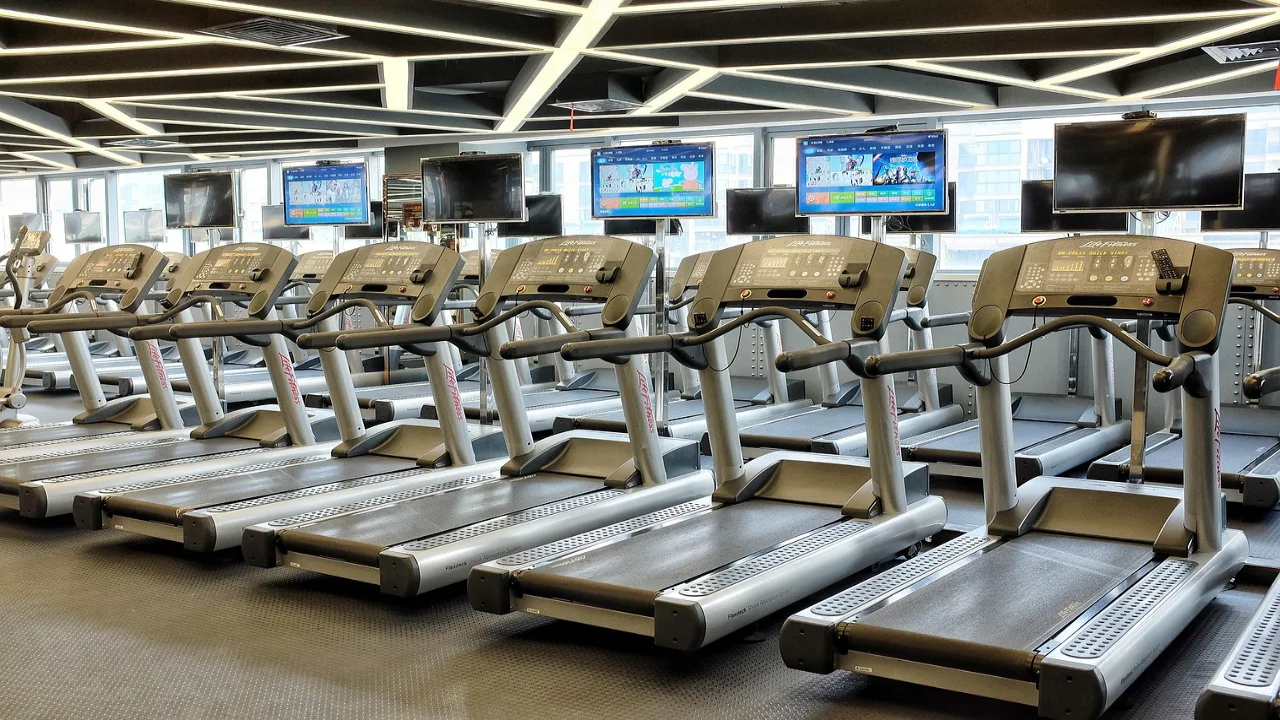
A home gym treadmill solves problems that repeatedly derail fitness in the UAE. Heat waves push daytime temperatures past comfortable thresholds, coastal humidity extends perceived strain late into the evening, and dust events can close outdoor options without warning. Inside apartments finished with tile or marble, noise control and floor vibration require planning, yet those constraints are predictable compared with the volatility outside. A single platform that delivers climate control, precise pacing, incline for hill stimulus, and session logging creates a dependable backbone for weekly cardio.
The decision is not just convenience. A home gym treadmill aligns with health guidelines, supports weight management through steady minutes or intervals, and protects bone with weight-bearing loading that cycling alone cannot match. Programming possibilities range from incline walking for joint-sensitive users to tempo and VO₂ style intervals for runners. With a mat stack and corner placement, operation remains neighbor-friendly, while power draw can be budgeted using simple kWh math. For shoppers comparing options, Sea Wonders stocks models that map cleanly to these use cases, from compact folding frames to premium incline trainers.
The sections below explain why consistency, guideline alignment, and performance versatility make a treadmill the anchor of an apartment-ready home gym in the Emirates.
TLDR
-
Heat, humidity, and dust make indoor cardio the reliable default; a treadmill preserves training windows.
-
Guideline minutes are easier to complete with fixed speed, incline, and repeatable session blocks.
-
One platform covers incline walking, tempo runs, and intervals, so goals progress without chasing weather.
1: Climate-proof consistency in extreme UAE seasons
Weather volatility is the top threat to adherence. Summer heat and high humidity raise the physiological cost of outdoor running and walking, while dust and sand reduce air quality and comfort. A home gym treadmill neutralizes those factors. Temperature and airflow are controllable, footing is consistent, and the session starts the moment the console turns on. That change removes the guesswork of dawn forecasts and late-night trade-offs.
Public safety signals reinforce this logic. Seasonal midday restrictions on outdoor labor are a reminder that strenuous effort under direct sun is risky. Treat that window as a hard stop for outdoor cardio and shift quality work indoors. Air quality checks add a second gate. When particulate levels rise or visibility drops, an indoor session avoids airway irritation and still delivers the planned training load. The treadmill becomes a simple decision tool: if heat or dust breaches a personal threshold, switch inside without losing minutes.
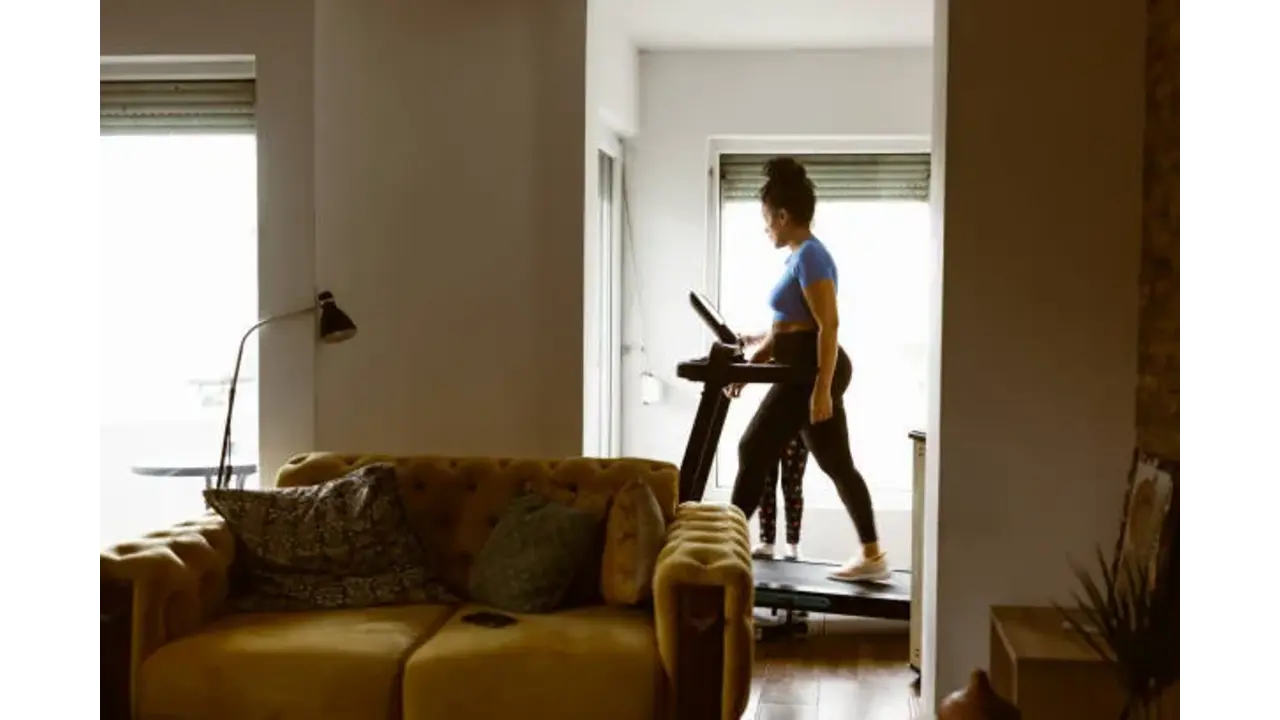
Apartment realities can be managed. Dense rubber matting and isolation feet reduce structure-borne vibration through tile or marble. Corner placement over a solid slab further lowers transmission. A small fan across the deck improves comfort at lower belt speeds, which keeps cadence smooth and quiet. With these controls in place, consistent training continues through long hot spells rather than pausing for weeks.
Is outdoor cardio safe during summer afternoons in the UAE?
For most residents, no. Early morning or late evening easy efforts may work on select days, but peak-heat hours are better replaced by treadmill sessions that protect health and preserve the plan.
2: Health outcomes and adherence to global guidelines
Health authorities recommend 150 to 300 minutes of moderate aerobic activity per week, or 75 to 150 minutes of vigorous activity, plus two days of muscle strengthening. A home gym treadmill turns those numbers into completed minutes because intensity and duration are programmable regardless of weather or daylight. Moderate work can be built from 30- to 45-minute brisk walks at a slight incline. Vigorous work can come from short interval stacks or controlled tempo blocks. Both paths satisfy the weekly targets while fitting apartment life.
FITT-VP framing simplifies the plan. Frequency is set by the calendar, intensity by speed or incline, time by the session length, type by walking or running, and progression by small adjustments every one to two weeks. For beginners, three steady sessions and one light interval day create a dependable 170- to 200-minute week. For busy professionals, two 25- to 35-minute vigorous sessions plus one 45-minute brisk incline walk meet targets with minimal schedule friction. Masters runners can rotate aerobic base days, incline strength, and shorter neuromuscular strides to manage fatigue.
Weight management benefits from precise, sustainable energy expenditure. Incline walking at 4 to 6 percent raises metabolic cost without forcing high belt speeds, which limits joint irritation yet keeps calories meaningful. For joint-sensitive populations, steady walking paired with twice-weekly strength circuits near the treadmill space maintains bone and tendon stimulus while controlling impact. Sleep quality and hydration cues are easier to standardize indoors, which further supports recovery and adherence.
How many treadmill minutes meet adult health targets?
A practical target is 180 to 220 minutes per week at moderate effort, or 90 to 120 minutes of vigorous intervals and tempos split across three to four sessions. The key is repeatability, and a home gym treadmill makes that repeatability routine.

3: Performance versatility from one platform
Versatility separates a treadmill from most single-use cardio tools. Speed and grade pair to create precise stimuli that roll from easy aerobic minutes to sharp interval sets without changing equipment. Short, structured repeats at fixed speeds build aerobic power with predictable recovery windows. Tempo blocks at sub-threshold effort develop durability, while stride pickups sharpen mechanics without race-day pounding. Incline controls extend that range further. Gradients around 3 to 6 percent raise metabolic cost at modest belt speeds for joint-friendly calorie burn. Higher grades train hiking strength and posterior chain engagement without outdoor hills. A slight grade near one percent often approximates calm-day outdoor effort for steady runs, while very easy walks can remain flat.
Deck cushioning matters for repeatability. Quality systems attenuate impact peaks and reduce tibial shock relative to hard pavement, so midweek tempo efforts land cleaner and recovery runs feel smoother. Console ecosystems add adherence scaffolding. Guided programs and auto-adjust features remove friction from planning, while large displays and route simulations preserve focus during longer aerobic sessions. Heart rate straps, cadence cues, and footstrike metrics turn pacing into data that can be trended across weeks.
Mode specificity still applies. Runners targeting road events gain race-aligned pacing indoors when heat or dust blocks outdoor sessions. Walk-first programs for weight management progress safely by extending minutes or gently lifting grade. For multitask households, one platform serves different abilities on the same day: brisk incline walking in the morning, interval sets later, and an easy flush before bed. This flexibility protects the calendar during busy periods and amplifies return on space in smaller apartments.
Where product fit intersects performance aims, premium incline trainers support steep grade work, balanced midrange decks handle intervals and daily mileage, and compact folding frames deliver reliable minutes in tight rooms. Sea Wonders stocks options across these archetypes, so performance planning can be matched to belt length, grade span, and console features that suit the goal profile.
4: Apartment-friendly setup with predictable noise control
Quiet operation depends on controlling structure-borne vibration rather than chasing silence after the fact. A dense rubber base under the frame absorbs impact energy, while separate anti-vibration feet at the contact points add compliance that helps on tile and marble. Corner placement over a solid slab transmits less energy than a mid-room position on a suspended floor. Leveling bolts remove deck rock, and lifting transport wheels off the mat during use prevents rattle. Footwear choice and cadence matter as well. Softer, quicker steps lower peak forces and belt slap, reducing the signature that neighbors hear.
Airflow and comfort interplay with noise. A small fan across the deck allows steady work at slightly lower belt speeds, which reduces impact and keeps sessions quiet. Cable routing under a cover keeps the power lead away from foot paths, and a grounded outlet with surge protection protects electronics from spikes. Routine care keeps sound levels predictable. Belt alignment and lubrication maintain low friction, and quick post-session dusting around the motor hood and rails prevents grit from amplifying noise over time.
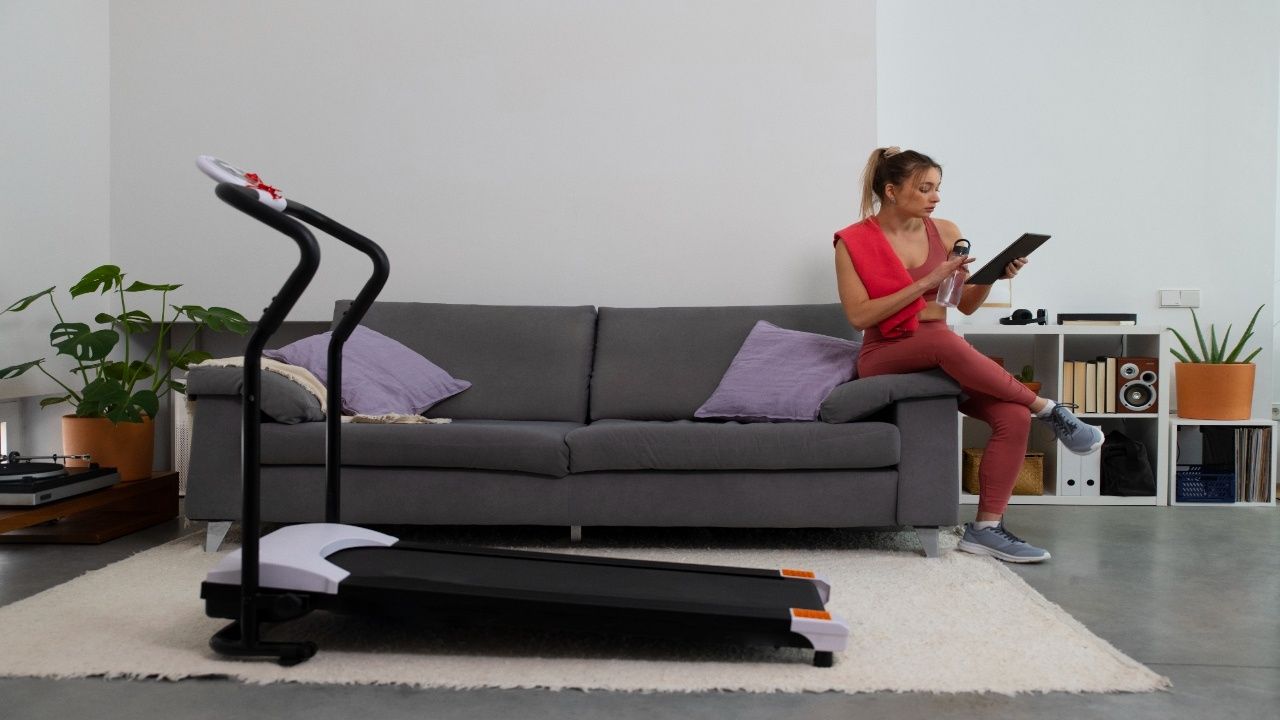
Space planning removes setup friction. Deck clearance at the rear and ceiling margin above the tallest stride are non-negotiable. Folding frames reclaim floor area between sessions but still need front access for hydraulic lifts. For households with limited delivery paths, measuring elevator depth and hallway turns avoids surprises on installation day. Walking pads can complement step counts in very small spaces but do not replace a full-length deck for running mechanics or interval precision.
Late evening training can remain neighbor friendly when timing and cadence are managed sensibly. Early evening hours typically align better with residential expectations. With isolation, placement, and behavior in sync, a treadmill becomes a stable part of an apartment routine rather than a source of complaints. This reliability keeps weekly minutes intact across long seasons when outdoor alternatives are inconsistent.
5: Transparent running costs and time efficiency
Operating cost is simple when framed as physics rather than guesses. Average device watts multiplied by hours equals kilowatt-hours. A utility calculator then converts kWh to dirhams for the month in question. Real-world draw on a treadmill shifts with speed, incline, user mass, and deck condition. Steady walking often sits in the lower band, while fast running or steep grades push draw higher. Console screens and fans add small overhead. An accurate picture emerges after a week of typical sessions logged on a smart plug that records kWh. That single data point calibrates expectations for the household.
Reducing draw does not require sacrificing training effect. Aligned and lubricated belts lower friction and heat. Fans improve comfort so belt speed does not creep upward to chase cooling. Standby drain disappears when consoles are powered down after use. Grouping longer sessions on common days consolidates cooling and lighting, which adds up in shared homes. The other side of the ledger is time. A treadmill converts short windows into complete workouts without travel to shaded paths or tracks. In dense neighborhoods, a 40-minute slot remains a 40-minute session rather than being halved by commuting.
Cost context helps avoid second-guessing. Bikes generally consume less electricity but may not deliver the same weight-bearing stimulus per minute. Treadmills consume more power yet often return higher energy expenditure when speed or grade rises. The decision should balance both figures against the primary goal: weight management, cardiovascular fitness, race preparation, or bone health. When the plan hinges on consistent minutes through long heat stretches, the return on a treadmill comes from sessions that happen on schedule.
Sea Wonders simplifies the purchase stage with a range that spans compact folding frames, balanced daily runners, and incline specialists. The category hub lists belt sizes, grade ranges, footprints, and console features so residents can match operating habits and goals to the right platform before delivery.
Sea Wonders treadmills
Clear goals reduce decision friction, and the Sea Wonders range covers the common UAE profiles. Daily runners seeking structured intervals and durable cushioning align with NordicTrack Commercial 1750 (2025) and Commercial 2450 (2025). Both platforms support tempo blocks, controlled hills, and guided content suited to frequent sessions.
Progressing athletes who want balanced capability without the heft of flagship frames match NordicTrack Commercial 1250 (2025) or the NordicTrack X16 (2025). These decks pair everyday mileage with interval precision and moderate footprints for apartments.
Incline-first conditioning and hiking simulation point to NordicTrack Elite X24i. Steeper grades raise metabolic cost at lower belt speeds, appropriate for joint-sensitive calorie targets and hill strength.
Compact and value-focused homes benefit from NordicTrack T Series models. T Series 10 offers feature depth in a tidy footprint; T Series 8 and T Series 7 prioritize straightforward controls and folding convenience for small rooms.
Shared spaces that require stow-and-go use cases align with NordicTrack Commercial LE Folding, which simplifies storage while retaining credible grade for aerobic work.
Budget-conscious shoppers still targeting reliable minutes can review ProForm Carbon TLX and ProForm Carbon Pro 2000, both suited to daily brisk walking and steady running.
For quick comparison of belt size, incline range, footprint, and console features across inventory, browse the category hub at Sea Wonders.
Ready-to-use UAE microcycles
Four-day adherence plan for hot months.
- Day 1: steady treadmill walk or jog, 35 minutes at conversational effort, 1 to 2 percent grade.
- Day 2: hill stimulus, 6 by 2 minutes at 4 to 6 percent with 2 minutes flat recovery; total 32 to 38 minutes.
- Day 3: recovery session, 25 to 30 minutes easy, flat, relaxed cadence.
- Day 4: controlled tempo, 3 by 8 minutes just below threshold with 2 minutes easy between, 1 percent grade; total 40 minutes. Weekly minutes: roughly 130 to 150, scalable by adding five-minute blocks.
Five-day weight-management block.
- Day 1: incline walking, 45 minutes at 4 to 6 percent, brisk but talkable pace.
- Day 2: intervals, 10 by 1 minute hard with 1 minute easy, flat or 1 percent; total 30 minutes.
- Day 3: steady aerobic, 40 minutes at 1 to 2 percent, gentle negative split.
- Day 4: hills, 5 by 3 minutes at 5 to 7 percent with equal easy; total 36 to 42 minutes.
- Day 5: long incline walk, 50 to 60 minutes at 3 to 5 percent. Weekly minutes: 205 to 225, high expenditure with controlled joint load.
Joint-sensitive week.
- Day 1: brisk walk, 25 to 35 minutes at 0 to 1 percent, compact steps, soft landings.
- Day 2: incline strength, 6 by 2 minutes at 3 to 4 percent with 2 minutes flat, focus on posture and gentle arm swing.
- Day 3: recovery walk, 20 to 25 minutes, flat.
- Day 4: progressive walk, 30 to 40 minutes building from easy to steady at 1 to 2 percent. Optional
- Day 5: short mobility and light strength circuit near the treadmill (squats, hinges, calf raises, core). Progression raises minutes first, then a slight grade, then only if symptom-free consider 30- to 60-second jog inserts.
All plans assume indoor cooling and hydration suited to session length. When outdoor dawn windows are clean and AQI is favorable, substitute one steady day outside and keep quality work indoors for precision.
FAQs
When should I pick a treadmill instead of running outside in the UAE?
Use the treadmill when temperature, humidity, or AQI exceed your personal safety thresholds, during the official midday/high-heat window, or when dust/visibility makes outdoor breathing or visibility unsafe — and use it when you need precise intervals or hill work.
How many treadmill minutes meet adult health targets?
Aim for 150–300 minutes of moderate activity or 75–150 minutes of vigorous activity weekly. Practically, 180–220 minutes of moderate treadmill work or 90–120 minutes of vigorous intervals/tempos across 3–5 sessions is a useful target for many people.
How do I make a treadmill session feel equivalent to outdoor effort?
Calibrate belt speed, then add ~1% incline for steady runs to approximate calm-day outdoor energy cost; use 1–2% for faster efforts. Include occasional higher-grade sessions to restore posterior-chain load that flat treadmill running under-represents.
How can I keep treadmill use apartment-friendly (noise & vibration)?
Use a dense rubber mat + anti-vibration feet, place the treadmill in a corner over a solid slab if possible, lift transport wheels off the mat during use, level the deck, and adopt a softer, quicker cadence. A small fan reduces sweat and stops belt-speed creep.
What should I expect for electricity and operating cost?
Power draw varies with speed, incline, user mass, and console usage. Typical sessions often consume a few tenths of a kWh; measure with a smart plug for accuracy, then convert kWh → AED using your utility tariff to estimate monthly cost.
Which treadmill types suit different UAE needs?
-
Daily runners: balanced decks with good cushioning and guided content (mid-to-premium models).
-
Joint-sensitive / weight management: incline-capable trainers for metabolic load at low speeds.
-
Small apartments: folding, compact frames with ~140 cm belts for reliable running mechanics.
Check local service coverage and footprint before purchase.
Related Blogs


Bose SoundLink Bluetooth Speaker
£50.00£60.00
Canon's press material for the EOS 5D states that it 'defines (a) new D-SLR category', while we're not typically too concerned
- Availability :In Stock